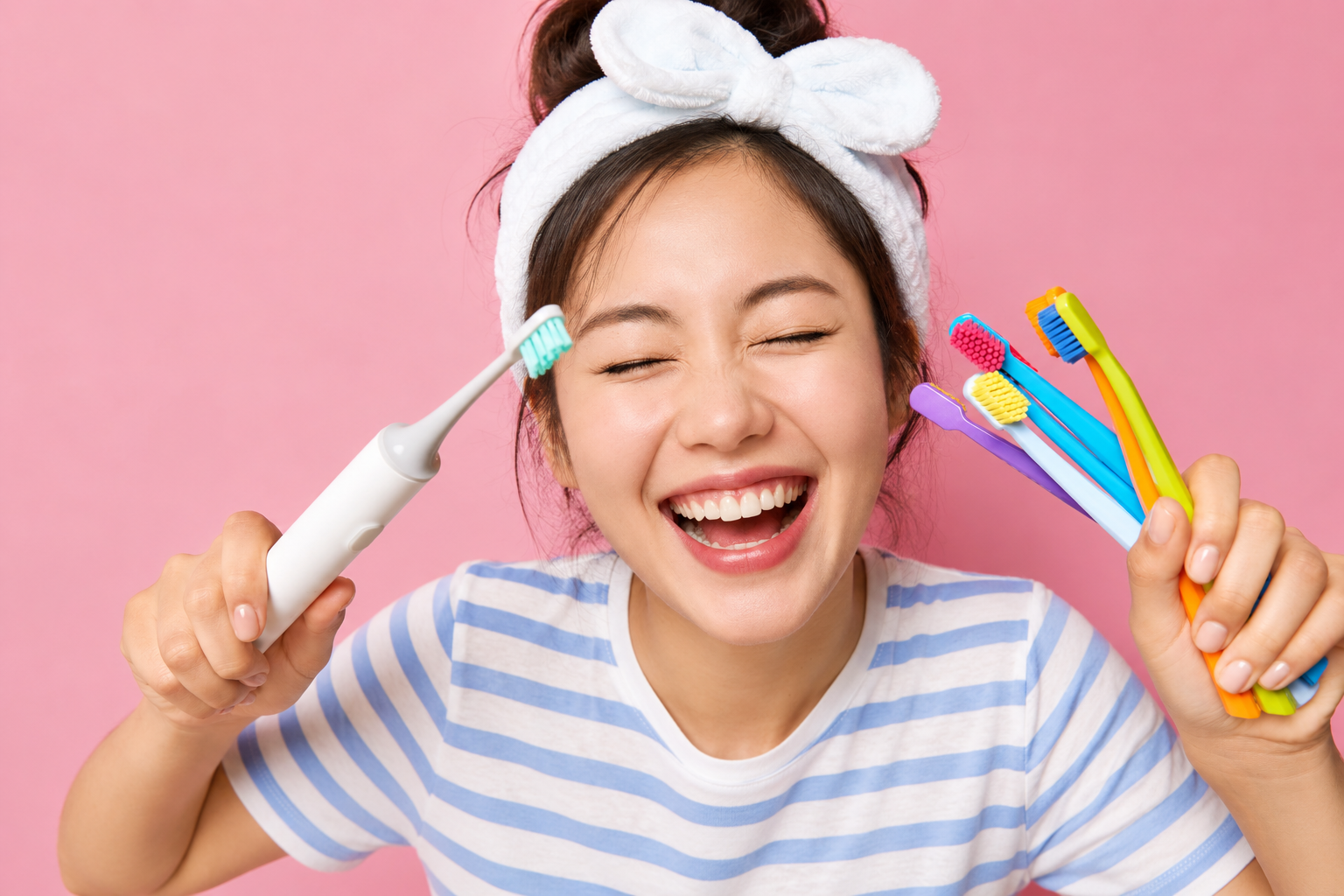
Walk into any pharmacy and you’ll see shelves full of toothbrushes—from simple manual brushes to advanced electric models with timers, pressure sensors, and multiple cleaning modes.
So, which one is actually better?
The truth is: both can keep your teeth healthy when used correctly. The most important factor isn’t the toothbrush itself—it’s how consistently and effectively you brush.
What Does a Manual Toothbrush Do Well?
A manual toothbrush is affordable, widely available, and easy to carry. With proper technique and enough brushing time, it can effectively remove plaque and maintain good oral hygiene.
However, many people tend to brush too quickly, miss difficult areas, or apply too much pressure, which may lead to less effective cleaning or gum irritation over time.
Why Do Many Dentists Recommend Electric Toothbrushes?
Electric toothbrushes use oscillating, rotating, or sonic movements to clean teeth more efficiently. Studies have shown that electric toothbrushes can help remove more plaque and reduce gum inflammation, especially for people who struggle with brushing technique.
Many models also include helpful features such as:
• Built-in timers to encourage brushing for the recommended two minutes
• Pressure sensors that alert you when brushing too hard
• Consistent cleaning motion that reaches difficult areas more effectively
These features make electric toothbrushes particularly useful for children, older adults, orthodontic patients, and anyone looking to improve their daily oral care routine.
Is an Electric Toothbrush Necessary?
Not necessarily.
A manual toothbrush used properly can still provide excellent results. An electric toothbrush is simply a tool that may help some people brush more effectively and consistently.
Think of it this way: the best toothbrush is the one you use correctly every day.
Our Recommendation
Whether you choose a manual or electric toothbrush, regular dental check-ups remain essential. Even the best brushing routine cannot remove hardened tartar or detect early signs of dental problems.
At Eli Dental Surgery, we believe prevention is always better than treatment. Our team can assess your oral health, provide personalized brushing advice, and help you choose the best oral care routine for your needs.
A healthier smile starts with the right habits—and the right guidance.
电动牙刷 vs 手动牙刷:哪一种更适合你?
走进药妆店,你会发现牙刷种类琳琅满目。从传统手动牙刷到具备计时器、压力感应和多种清洁模式的电动牙刷,让人不禁想问:
究竟哪一种比较好?
答案其实很简单:两者都可以有效清洁牙齿。真正影响口腔健康的关键,不是牙刷的价格,而是刷牙是否正确且持续。
手动牙刷的优点
手动牙刷价格实惠、容易购买,也方便携带。只要掌握正确刷牙方式,并维持足够的刷牙时间,同样能够有效清除牙菌斑。
不过,许多人在日常刷牙时容易出现以下问题:
• 刷牙时间不足
• 忽略后牙或牙缝区域
• 用力过度,造成牙龈不适
这些习惯都会影响清洁效果。
为什么许多牙医推荐电动牙刷?
电动牙刷透过高速震动、旋转或声波技术帮助清洁牙齿,能够更稳定地去除牙菌斑。
研究发现,电动牙刷对于减少牙菌斑堆积和改善牙龈健康具有一定优势,特别适合:
• 刷牙技巧不够熟练的人
• 配戴牙套者
• 长者
• 儿童
许多电动牙刷还具备:
✓ 两分钟计时功能
✓ 过度施压提醒
✓ 更均匀稳定的清洁动作
帮助使用者建立更好的刷牙习惯。
电动牙刷一定比较好吗?
未必。
如果能够掌握正确刷牙技巧,手动牙刷同样能够达到良好的清洁效果。
电动牙刷并不是必需品,而是一种帮助部分人刷得更彻底、更轻松的工具。
最好的牙刷,其实是你愿意每天认真使用的那一支。
Eli Dental 的建议
无论你使用手动牙刷还是电动牙刷,定期牙科检查仍然不可或缺。
因为即使每天认真刷牙,牙结石仍然可能形成,而许多早期口腔问题也往往没有明显症状。
在 Eli Dental Surgery,我们会根据每位患者的口腔状况提供个人化建议,帮助你建立更有效的口腔护理习惯。
因为健康的笑容,不只是刷出来的,更是长期维护出来的。
